 Dusty Garza
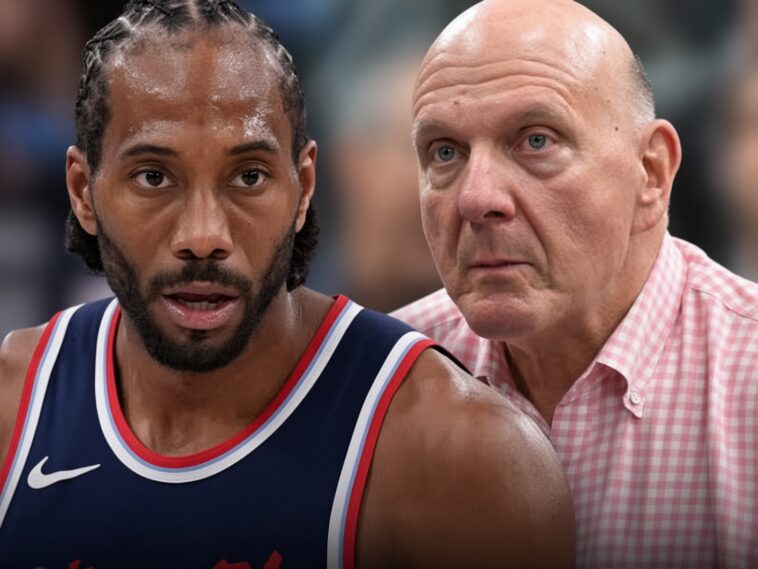
The headline sounds like an absolute franchise killer. The NBA just hit the LA Clippers by stripping five first round draft picks, slapping them with a 30 million dollar fine, and banning owner Steve Ballmer from his own building for an entire year over a massive salary cap scheme tied to Kawhi Leonard.
Losing five first round picks sounds devastating because it is supposed to. That is the big, scary number the league office puts right at the very top of the press release so every fan scrolls past, spits out their drink, and thinks the commissioner just threw the book at them. But once you follow the money and look at what actually went down with the Toronto Raptors trade, you see how much that headline exaggerates the damage.
Start with the shock value. Casual fans hear five first rounders and think the Clippers are headed straight for the NBA cellar with zero young talent and nothing to look forward to on draft night for a decade. But then Adam Silver unpauses the blockbuster deal that sends Kawhi packing to Toronto.
Suddenly, the math changes completely. That package coming back from the Raptors is not just bench warmers and warm memories of 2019. Toronto had to hand over real assets to get Kawhi: multiple future first round picks, a pick swap, two second round picks, plus Brandon Ingram and Gradey Dick.
Think about the street math here. If someone takes five twenty dollar bills out of your wallet, but immediately hands you back two twenties, a five, and an upgrade ticket, you did not go broke. You took a hit, but you are still standing with cash in your pocket. The Clippers are down net assets, sure, but they are not staring into a totally empty cupboard. If Toronto gets banged up down the road, that pick swap can shoot the Clippers right back up the draft board. Throw in Brandon Ingram and Gradey Dick, and this so called death penalty suddenly looks totally survivable.
This is the quiet part nobody talks about. The league gets to stand at the podium, puff its chest out, brag about taking five picks, and look tough in front of the TV cameras. But by letting the Clippers complete that trade, the NBA made sure one of its biggest big market teams did not turn into an unwatchable dumpster fire. It is discipline with training wheels. Kawhi paid a 700,000 dollar fine that feels like loose couch change to him, the Clippers caught an instant refund on draft night from Canada, and everyone took just enough heat to move on without facing the real fallout.
To understand how wild that leniency really is, take a quick trip back to December 2011. That was the year the NBA pulled off the most famous blocked trade in sports history when it killed a three team deal that would have sent prime Chris Paul to the Los Angeles Lakers to team up with Kobe Bryant.
Here is what makes that so crazy to look back on today. In 2011, Chris Paul, the Lakers, and the Houston Rockets broke zero rules. Nobody was running secret payroll accounts. Nobody set up fake companies to funnel side cash. The trade followed every legal salary cap guideline in the book. But because the league temporarily owned the New Orleans Hornets at the time, Commissioner David Stern stepped in and wiped out the entire trade on the spot, hiding behind three famous words: “basketball reasons.” He killed a completely clean trade just because other team owners whined about big market superteams and complained about competitive balance.
Now jump back to Kawhi Leonard. The Clippers and Leonard’s camp were caught running a multi year, 66 million dollar underground payroll scheme that involved arena contractors and fake green energy sponsorships. They actually broke the rules. Yet when it came to Leonard’s trade request out of town, the NBA did not say “basketball reasons.” They did not void the deal. They stamped it approved and let him ride off to Toronto.
That double standard is why guys like Stephen A. Smith were losing their minds on ESPN. Stephen A. came out hot on First Take, arguing the NBA should have stepped in, voided the Toronto trade immediately, and suspended Kawhi for the whole season. His point was dead simple: if you cheat to build a superteam and your camp demands under the table cash, you should not be allowed to ask out and skip town the second the building catches fire. You should be stuck in LA sitting right next to the mess you created.
That sounds great on sports radio. But the league was never going to touch that with a ten foot pole.
The difference between David Stern blocking Chris Paul and Adam Silver dealing with Kawhi comes down to labor law. When Stern blocked the CP3 trade, he did it wearing his hat as the acting owner of the Hornets, not by stripping player rights under the CBA. With Kawhi, the minute Adam Silver tries to rip up a signed contract, blow up a valid trade, and ban a superstar from playing for a year, he grabs an electric fence.
The National Basketball Players Association would have filed an emergency grievance before the day was over. The league and the players union have a strict agreement. The commissioner has wide authority to strip draft picks from owners, fine billionaire front offices, and ban executives from team facilities. But players have collectively bargained contracts. If an outside arbitrator heard the case and told Adam Silver he overstepped his authority, the commissioner’s power over player discipline would be permanently broken.
The union’s defense would have been airtight: billionaire owners and team executives were the ones who wrote the consulting checks and handled the money pipelines. You do not let management break the rules and then put the entire punishment on the worker’s back.
So Adam Silver took the easy way out. He dropped a heavy hammer on the Clippers on paper to make the public happy, kept the superstar healthy and on the floor, and steered clear of an all out war with the union. Letting Kawhi Leonard bounce to Toronto was not just being soft. It was pure business, designed to look tough in the headlines while letting the guy at the center of the mess walk right out the side door.